The Ten O'Clock Table: A Greek Answer to Bottomless Brunch
Somewhere in a British city on a Saturday, a group is being shown to a table with a two-hour clock and a jug of something fizzy. There will be a menu with a tick-box feel, a waitress checking the drinks order, and a faint sense that the fun has a deadline. It can be a laugh. But it is also a performance.
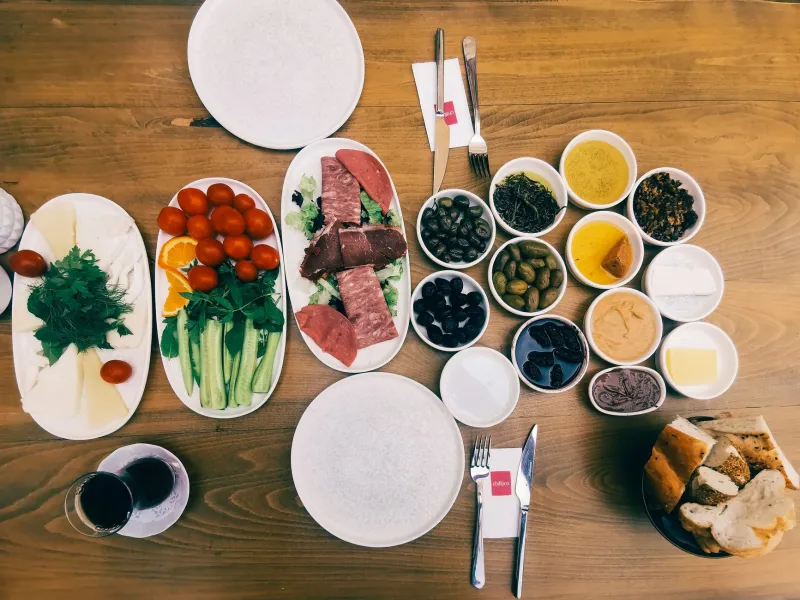
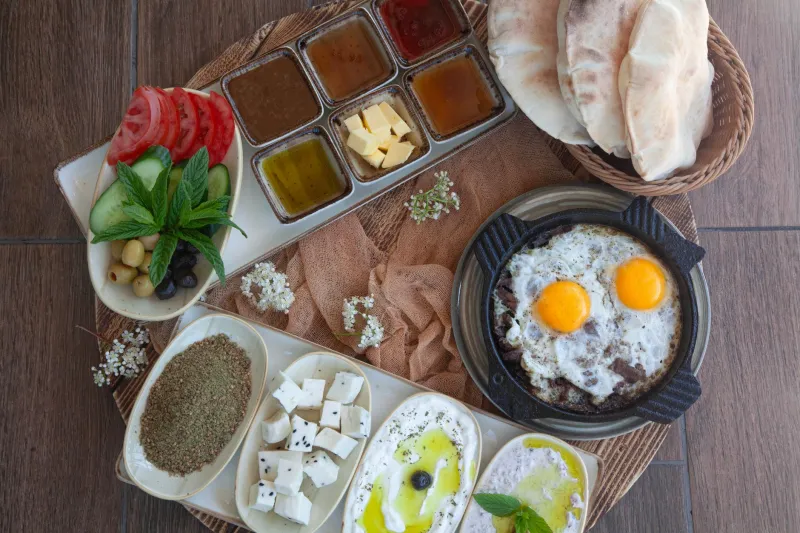
The Greek late-morning table asks less of you and gives more back. It is not a fixed menu or a bottomless offer. It is a spread of small, generous things — bread, tomatoes, olives, cheese, eggs, a spoon sweet, very strong coffee — laid out without ceremony. You sit. You nibble. You pour another coffee. Nobody is watching the clock.
What a Greek late morning actually looks like
In Greece, breakfast is often a modest, stand-up affair: a pastry, a coffee, maybe a piece of fruit. The late-morning meze is something else. It belongs to the weekend, to visitors, to the pleasant limbo between breakfast and lunch. It is what appears when nobody wants to commit to either.
The table is rarely complicated. A loaf of bread. Olive oil. Ripe tomatoes. A slab of feta or a wedge of something firmer. A handful of olives. Eggs, if there are eggs. Something sweet in a small dish. Coffee, always coffee. The point is not to follow a recipe. The point is to put out enough that people can help themselves and enough time that they want to.
That is the real contrast with bottomless brunch. Bottomless brunch is unlimited drink inside a limited window. A Greek meze morning is limited food inside an unlimited window. The generosity is in the pacing, not the pouring.
The table, not the menu
You do not need a recipe book to do this. You need a shopping list with a bit of slack in it, and the will to put things on plates rather than in individual portions.
Think in components, not courses. Something starchy. Something juicy. Something salty. Something creamy. Something green or sharp. Something sweet. Something to drink. That is a late-morning meze.
And keep it small. A tight, well-chosen spread feels more generous than a crowded one. You are aiming for a table that looks abundant but not exhausting, where everything has a reason to be there.
A late-morning meze to build at home
Here is a practical menu for four people. Adjust as you like. None of it is sacred, and all of it is better if you resist the urge to add just one more thing.
Bread and oil. A good sourdough or a village-style loaf, warmed and torn rather than sliced into neat triangles. A small jug of olive oil for dipping, plus a little dish of salt. If you have oregano, scatter a pinch over the oil.
Tomatoes. Sliced ripe tomatoes with salt and a little oregano is the ideal. In November, when British tomatoes are less persuasive, use slow-roasted tomatoes or a good tin of plum tomatoes warmed with olive oil. No shame in either.
Olives. A bowl of Kalamata and a bowl of green olives. Rinse them if they are very salty, and let them come to room temperature before serving.
Cheese. Feta, obviously, but also a firmer cheese such as graviera or kefalotyri if you can find it. A soft, fresh cheese like anthotyro is lovely if you spot it. Two cheeses is plenty.
Eggs. Fried in olive oil with a pinch of oregano, or a simple courgette omelette cut into wedges. Bring them out after the first round of coffee, not before.
Yoghurt, honey and walnuts. A bowl of thick yoghurt with honey and broken walnuts. This is not a dessert. It is a pause.
Spoon sweets. A small dish of fig, quince or cherry spoon sweet, served in tiny spoonfuls alongside coffee. If you cannot find spoon sweets, a good marmalade or a piece of halva will do the same job.
Coffee. Greek coffee if you have a briki, or a strong filter coffee, or a cafetière. Tea is fine too. The point is that it keeps coming.
Put everything on sharing plates. Do not dress individual plates. Let people reach.
Pacing: how to make it last until lunch
The mistake is to put everything out at once and then wonder why everyone is finished in forty minutes. Pace it gently.
Start with bread, oil, olives, cheese and tomatoes. That is the first act. Let people talk. Pour coffee. Do not rush to clear anything.
Then bring the eggs. By this point, someone will have relaxed into their chair. The table will have that comfortable, slightly messy look of a meal in progress.
Keep the yoghurt and spoon sweets for the end, when the coffee is on its second or third round. A small spoonful of something sweet is a signal that you are not in a hurry. It is also a good excuse to sit for another twenty minutes.
Do not clear the table too early. In a Greek meze, the table stays. Plates are pushed aside, not whisked away. The remnants are part of the conversation.
And leave the clock alone. If the food runs out, that is fine. If it does not, that is fine too. The meal ends when people stop reaching, not when a timer goes off.
Why it suits a British weekend
British weekends are often over-planned. We book the slot, order the set menu, pay the deposit, and then try to relax on schedule. A Greek late-morning meze is a small act of resistance. It says: we are here, the coffee is hot, the bread is good, and there is no next thing.
It also works in real British weather. If the sun appears, take the plates outside. If it does not, stay in the warm kitchen and let the windows steam up. Either way, the table does the work.
So next weekend, skip the bottomless queue. Put a loaf on the board, slice some tomatoes, open a jar of olives, and make a pot of coffee. Sit down at ten. See how long you stay.