The Generous First Bite: Bread, Oil and Olives at the Greek Table
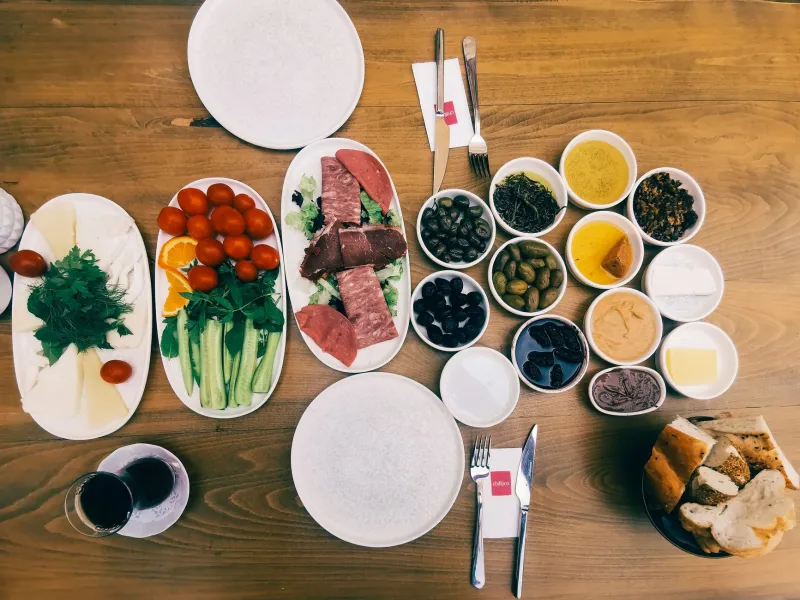
Walk into a taverna anywhere from Thessaloniki to Chania and something happens before you have opened the menu. A basket lands. A small jug follows. Then a bowl, a saucer, maybe a plate of something pale and cool. Nobody announces it and nobody orders it. It is simply how a Greek table says hello.
That opening is easy to overlook. We tend to write about meze in terms of the dishes that arrive later, the saganaki and the grilled octopus and the little prawns. But the first two minutes tell you almost everything about the meal ahead. Get them right and the rest of the evening relaxes into place. Get them wrong and you can feel it, the way you can feel a party where nobody has offered you a drink.
The unspoken order of things
A Greek meal does not begin with a decision. It begins with a gesture. Bread, oil, olives and something to dip into: four things that cost very little, keep for ages and make a table feel as though it has been expecting you.
There is a practical logic underneath it, of course. The bread and oil keep hunger in check while the kitchen works, which is why a meze spread can stretch across three hours without anyone getting tetchy. But the nicest thing about the ritual is that it is not performative. It does not ask for a chef. It asks for a host who has thought about it.
The loaf: a generous thing, not a garnish
Greek bread is a subject in its own right. Horiatiko psomi, the village loaf, is a straightforward thing of flour, water, salt and yeast, often given a little olive oil for softness, with a crust that fights back and a crumb built for mopping. In the north you will meet heavier, sourer loaves. In Cyprus and across the islands, a good bakery loaf or a fluted koulouri will do the same job at the start of the day.
Then there is paximadi, the twice-baked barley rusk that has kept Cretan shepherds and sailors fed for centuries. Hard as a roof tile, it softens under water or tomato and olive oil into something that becomes the whole point of the plate rather than the base of it. Order a dakos on Crete and you will see what a rusk can do when it is treated as food rather than packaging.
For a British kitchen the lesson is simple: the bread should be worth eating on its own. A decent country sourdough, a Cypriot bakery loaf, anything with a crust and a bit of chew. Warm it through, slice it thick, and put it on the table in something that looks like you meant it. Thin, cold supermarket slices are the one thing that can make a good spread feel mean.
The oil: pour it, do not ration it
Greek extra virgin olive oil is a different creature from the pale, neutral stuff that gets used for frying. Much of it is green, grassy and peppery enough to make you cough, particularly early in the harvest. Koroneiki olives from Crete and the Peloponnese give that bright, assertive character; northern groves lean softer and fruitier.
Two things matter more than the label. The first is freshness, which is why you should look for a harvest date rather than a best-before stamp. The second is how it is served. Olive oil is not a dressing to be sprinkled miserly over a salad. In Greece it goes into a shallow saucer or a little jug at the centre of the table, with a pinch of salt, sometimes a pinch of dried oregano, and everyone helps themselves.
Buy in smaller bottles than you think you need, keep them out of the light and away from the hob, and use them within a few months of opening. A modest bottle of fresh Greek oil eaten quickly will beat a fancy one used grudgingly over two years.
The olives: a bowl, not an afterthought
A bowl of olives on a Greek table is never a garnish. It is a whole course, and the country grows several worth getting to know.
Kalamata, the almond-shaped dark ones from the southern Peloponnese, are the most familiar: winey, soft, faintly smoky. Halkidiki olives, from the north, are big and green and firm, with a clean, almost grassy bite. Then there are the throubes of Lesbos, wrinkled and dark because they are left to cure on the tree rather than in brine, giving a deep, intense, faintly bitter flavour that divides opinion and rewards persistence.
Serve them at room temperature, never straight from the fridge. Rinse them if the brine is aggressive. A strip of orange peel, a few fennel seeds, a splash of good oil and the whole bowl lifts. Buy from a deli counter or a specialist grocer where you can taste before committing; supermarket olives in heavy brine are the reason half the country thinks it does not like them.
The first dip sets the tone
One good dip beats four tired ones. Tzatziki, thick with yoghurt and grated cucumber and more garlic than seems sensible. Taramasalata, made properly from cured roe and bread and oil, not the fluorescent pink mousse of memory. Tyrokafteri, whipped feta with chilli. Melitzanosalata, smoky aubergine beaten with oil and vinegar.
And then fava, the quiet hero of Santorini, made from yellow split peas cooked down with onion until velvety, then finished with olive oil, capers and raw onion. It costs pennies and it will outclass most things on the table.
Bringing it to a British table
A few practical notes for anyone setting this up at home.
- Buy fewer things, better. Three bowls that are genuinely good will beat seven that are fine.
- Warm the bread. It takes four minutes and changes the mood of the whole table.
- Use shallow dishes. Oil, dips and olives all look more generous in a wide, low bowl than a deep one.
- Take everything out of the fridge half an hour early. Cold food tastes of cold.
- Put the oil on the table, not back in the cupboard. It should be the first thing a guest reaches for.
Why the opening matters
Greek hospitality has a word, philoxenia, which means something closer to love of the stranger than simply being polite. The bread and the oil and the olives are that idea in physical form. They say: sit down, we have plenty, there is no rush.
That is worth remembering if you are planning a meze night in a British kitchen with a finite budget and a small table. The plates that come later are the conversation. The basket and the saucer and the bowl are the welcome. Start there and the rest of the evening will look after itself.